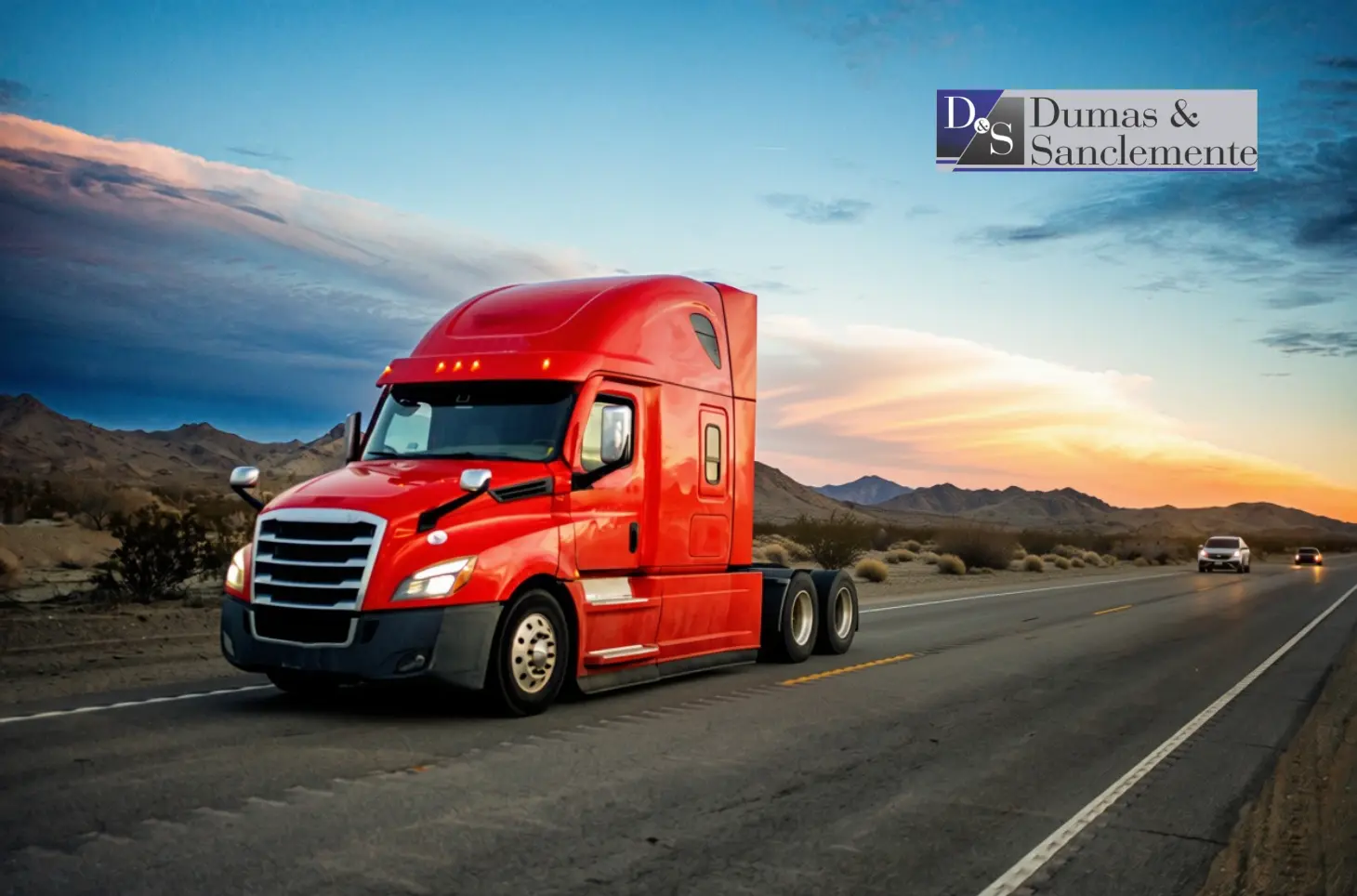
You’ve probably seen a semi-truck traveling without a trailer attached. It looks smaller and lighter than a full tractor-trailer, so you might assume it’s easier to handle. But what if removing the trailer actually makes the truck more difficult to control?
So, what is bobtailing, and what makes it dangerous? Bobtailing is the term for driving the tractor portion of a big rig without a trailer. Without the trailer’s weight pressing down on its rear wheels, the truck has less traction and can be harder to control during sudden braking or sharp turns. On wet pavement or in heavy traffic, those handling differences can increase the risk of a serious collision.
If you drive US Highway 41, State Road 54, or other busy roads around Lutz, understanding these risks can help you recognize the danger. And if a bobtail truck has already struck your vehicle, knowing how the truck was being operated can help determine who may be responsible for your injuries and which insurance policy applies.
We speak English, Español, and Français. At Dumas & Sanclemente Law, PLLC, clients have direct access to attorneys backed by 20 years of combined experience, including experience working on the defense side of personal injury claims. Our committed team’s guiding principle is simple: Seeking justice for the injured.
At a Glance
- What is bobtailing? Driving a semi-truck tractor without a trailer attached.
- Why can it be dangerous? Reduced weight over the rear wheels can affect traction, braking, and handling.
- Is bobtailing illegal? No. It’s a common trucking practice, but drivers must follow applicable safety regulations.
- Who is responsible for an accident? Liability may involve the truck driver, trucking company, or other parties.
- What if you’re injured? You may be able to pursue compensation if someone else’s negligence caused your injuries.
What Is Bobtailing in Trucking?
Bobtailing happens when a truck driver operates the tractor portion of a semi-truck without pulling a trailer. The tractor contains the engine, cab, and driving controls and connects to a trailer through a coupling device called a fifth wheel.
Without a trailer attached, the tractor is shorter and lighter than a full tractor-trailer rig. However, it still remains a large commercial vehicle with handling characteristics that differ from those of a passenger car.
Bobtailing is routine in the trucking industry. A driver might travel without a trailer after completing a delivery, while returning to a terminal, or when heading to pick up another trailer. For example, a driver drops off a loaded trailer near Wesley Chapel, then travels to another facility to collect a new trailer. That trip between facilities involves bobtailing.
Is bobtailing the same as deadheading?
Although the terms sound similar, they describe different situations.
- Bobtailing means the tractor travels without a trailer.
- Deadheading means the truck travels without cargo, often while pulling an empty trailer.
The distinction affects how the truck handles and may also influence insurance coverage after an accident.
Why Is Bobtailing Dangerous?
You might expect a lighter truck to be easier to stop and maneuver. But commercial truck braking systems and suspension components must accommodate substantial changes in weight, and removing the trailer changes how the tractor responds.
Reduced traction and different braking behavior
When a trailer is attached, part of its weight rests on the tractor’s drive axles, pressing the rear wheels against the pavement. Without that weight, the drive tires have less available traction. When a driver brakes suddenly, accelerates, or turns, the reduced grip can make the tractor more difficult to control. If the tires lose traction, the truck may skid.
During hard braking, the lightly loaded drive wheels may lose traction before the driver can bring the vehicle to a controlled stop. The risk increases on wet or slippery pavement. That doesn’t mean every bobtail truck needs a longer stopping distance than a loaded truck.
Stopping performance depends on speed, braking equipment, tire condition, and road conditions. The concern is how the tractor responds when the driver must stop unexpectedly.
Handling during turns and emergency maneuvers
A bobtail truck can also become unstable when a driver swerves or takes a sharp turn too quickly. Abrupt steering combined with braking can cause the tractor to skid sideways or rotate. Unlike a full tractor-trailer rig, a bobtail truck cannot experience traditional trailer jackknifing because there’s no trailer to swing toward the cab. However, the tractor itself can still lose directional control.
These differences make proper speed, following distance, and smooth steering important when operating without a trailer.
How Do Bobtail Truck Accidents Happen on Lutz Roads?
Lutz spans Hillsborough and Pasco Counties and sits near communities such as Wesley Chapel, Land O’ Lakes, and Carrollwood. US Highway 41 and State Road 54 carry a mixture of passenger vehicles, delivery trucks, and other commercial traffic.
A bobtailing truck traveling through these areas must respond to intersections, traffic signals, turning vehicles, and sudden changes in traffic speed.
Several circumstances can contribute to bobtail truck accidents:
- Sudden stops in heavy traffic. Following too closely can force a driver into hard braking when traffic slows, increasing the risk of skidding.
- Rain and slippery roads. Florida’s heavy rain reduces visibility and tire grip. A driver who fails to adjust speed may lose control.
- Unsafe turns. Turning too quickly can cause a lightly loaded tractor to skid, particularly when braking and steering occur together.
- Distracted driving or driver fatigue. Inattention and exhaustion delay a driver’s response to hazards.
- Mechanical problems. Worn tires, brake failure, or inadequate maintenance can contribute to a collision.
Bobtailing alone doesn’t establish negligence. After a truck collision, the question is whether someone failed to use reasonable care and whether that failure caused or contributed to the accident.
Who Is Liable for a Bobtail Truck Accident in Florida?
If you’re injured in a collision involving a bobtail truck, determining who is responsible may be more complicated than identifying the driver. The truck’s ownership, the driver’s relationship with the trucking company, and the purpose of the trip can all affect truck accident liability.
The truck driver
The truck driver may be held liable for speeding, following too closely, distracted driving, unsafe turns, or failing to adjust for weather and traffic conditions.
Federal hours-of-service rules also limit driving and duty periods for covered commercial drivers. If driver fatigue contributed to the accident, driving logs may reveal whether the driver violated those requirements. The evidence must connect the driver’s negligence to the collision and resulting injuries.
The trucking company
A trucking company may be held responsible if its employee causes an accident while performing work-related duties. The company may also face claims based on its own conduct, including negligent hiring, inadequate training, or failing to maintain equipment it was responsible for keeping safe.
For example, if a company directs a driver to retrieve a trailer and the driver causes an accident along the way, the assignment and employment relationship may be central to determining the company’s responsibility.
Other responsible parties
Some truck accidents involve multiple parties. A maintenance provider may bear responsibility for defective repairs, while a manufacturer could face a claim under product liability laws if a defective part contributed to the collision.
Another motorist’s negligence may also be a factor. Florida’s comparative fault law provides for allocating fault among responsible parties in covered negligence actions. A thorough investigation is needed to identify who may be held accountable.
What Insurance Covers a Bobtail Truck Accident in Florida?
Florida is a no-fault auto insurance state, which means your own personal injury protection (PIP) coverage may help pay certain medical expenses and lost wages after a bobtail truck accident, regardless of who caused the collision.
Under Florida Statutes § 627.736, PIP provides up to $10,000 in qualifying benefits, subject to statutory limits and requirements. You must receive initial medical treatment within 14 days of the accident to qualify for medical benefits. Depending on the medical findings, those benefits may be limited to $2,500.
However, PIP may not cover all your losses. If a truck driver’s negligence caused your injuries, you may also have a claim against the driver, the trucking company, or another responsible party. Florida law places additional requirements on recovering compensation for pain and suffering in certain motor vehicle accident cases.
Determining which liability insurance policy applies may depend on whether the driver was performing work for a trucking company or using the truck for personal reasons. For example, a driver traveling without a trailer to pick up another load may still be working for the trucking company.
A truck accident attorney can review the driver’s assignment, company records, and insurance policies to identify potential sources of compensation for your injuries and other losses.
What Should You Do If You’re in a Bobtail Truck Accident?
If you’ve been involved in a collision with a bobtail truck, your health and safety come first. Some injuries aren’t immediately apparent, and symptoms may develop hours or days later. What you do after the accident can also affect your ability to pursue compensation.
Here are steps to take following a collision:
- Call 911 and report the accident. Request emergency assistance if anyone is injured, and move to a safe location if you can do so without putting yourself or others at risk.
- Get medical attention. Have your injuries evaluated promptly, even if you initially feel fine. Some injuries take time to become apparent, and medical records can help document their connection to the accident.
- Document the scene. If you can do so safely, photograph the vehicles, damage, roadway conditions, and visible injuries. Record the trucking company’s name and identifying information on the tractor, and collect contact information from witnesses.
- Keep records of your losses. Save medical bills, treatment records, repair estimates, receipts, and documentation of missed work. These records can help establish how the accident has affected you financially.
- Be cautious when speaking with insurance companies. Notify your own insurer as required by your policy, but avoid speculating about fault or giving unnecessary recorded statements to another party’s insurer before seeking legal advice.
- Contact a truck accident attorney promptly. Once your immediate medical needs are addressed, seek legal advice. Evidence held by trucking companies can be lost or overwritten, so contacting an attorney early can help protect your claim.
How Do You Prove Negligence in a Bobtail Truck Accident?
The evidence you gather at the accident scene is a starting point, but proving negligence requires a closer look at what happened before the collision. Was the driver traveling too fast for the conditions? Had the trucking company neglected a maintenance problem? Was the driver following company instructions when the accident occurred?
A truck accident lawyer can investigate these issues by reviewing police reports, witness accounts, maintenance and dispatch records, driver qualifications, hours-of-service logs, and available electronic data. Accident reconstruction professionals may also examine physical evidence to establish how the collision occurred.
The evidence can help establish who was responsible, how their negligence contributed to your injuries, and what losses you suffered. Depending on the circumstances, a Florida truck accident case may involve compensation for medical expenses, lost wages, reduced earning capacity, pain and suffering, and other legally recoverable damages.
An attorney can also handle negotiations with insurance companies and, if a fair settlement cannot be reached, pursue the claim in court.
How does Florida’s comparative fault law affect your claim?
Under Florida Statutes § 768.81(2), your potential compensation in a covered negligence action is reduced by your percentage of fault. Under § 768.81(6), if you’re found more than 50% responsible for your own injuries, you cannot recover damages.
For example, if your damages total $100,000 and you’re found 20% responsible, your damages would be reduced to $80,000 before accounting for other issues affecting recovery.
Because the percentage of fault assigned to you can significantly affect your compensation, a truck accident attorney can gather and evaluate evidence, challenge unsupported allegations of fault, and advocate for an allocation of responsibility supported by the facts.
Frequently Asked Questions
Is bobtailing illegal in Florida?
No. Bobtailing is a lawful trucking practice. However, drivers and motor carriers must comply with applicable traffic laws, vehicle safety requirements, and federal regulations. A driver may be held liable if negligent operation causes an accident.
Is a bobtail truck harder to stop than a loaded semi-truck?
Not in every situation. Removing the trailer reduces weight but changes axle loading and braking characteristics. Reduced traction at the rear wheels can make the tractor harder to control during sudden braking. Actual stopping distance depends on speed, equipment, road conditions, and other factors.
Can a bobtail truck jackknife?
Not in the traditional sense. Jackknifing occurs when a trailer swings toward the tractor. Because a bobtail truck has no attached trailer, that specific type of jackknife cannot occur. However, the tractor can still skid, spin, or lose directional control.
Who pays for injuries caused by a bobtail truck accident?
That depends on who caused the accident and which insurance policies apply. The truck driver, trucking company, or other responsible parties may be held liable. Whether the driver was conducting trucking business can affect coverage.
How long do I have to file a truck accident lawsuit in Florida?
Under Florida Statutes § 95.11(5)(a), the filing deadline for a negligence lawsuit is two years. Because evidence can disappear well before the filing deadline, seeking legal advice promptly can protect your ability to pursue a claim.
Injured in a Bobtail Truck Accident? Let’s Talk
English • Español • Français
A truck doesn’t need a trailer to cause serious injuries. If you’ve been hurt in a collision with a bobtail truck, you may be dealing with medical appointments, missed paychecks, and questions about an accident you couldn’t have anticipated.
At Dumas & Sanclemente Law, PLLC, attorneys Axel J. Dumas and Jonathan Sanclemente bring 20 years of combined experience to representing injured clients. Axel previously represented insurance companies in personal injury matters, giving him insight into how insurers evaluate and defend claims. Jonathan has focused his career on representing injured individuals and has litigated hundreds of cases co-founding the firm. Together, their backgrounds help them anticipate disputes and prepare cases for litigation when necessary.
When you contact our firm, you’ll speak directly with an attorney about your circumstances and legal options. We emphasize personal attention, honest communication, and helping you make informed decisions about your claim.
From our Lutz office, we serve injured people in Lutz, Wesley Chapel, and surrounding communities. We speak English, Español, and Français, and we answer calls 24/7.
Contact us today at (844) 400-2667 or complete our online form to schedule your free consultation with an attorney.
Dumas & Sanclemente Law, PLLC — Seeking justice for the injured.
Copyright © 2026 Dumas & Sanclemente Law, PLLC. All rights reserved.
The information in this blog post (“post”) is provided for general informational purposes only and may not reflect the current law in your jurisdiction. No information in this post should be construed as legal advice from the individual author or the law firm, nor is it intended to be a substitute for legal counsel on any subject matter. No reader of this post should act or refrain from acting based on any information included in or accessible through this post without seeking the appropriate legal or other professional advice on the particular facts and circumstances at issue from a lawyer licensed in the recipient’s state, country, or other appropriate licensing jurisdiction.
Dumas & Sanclemente Law, PLLC
1935 Highland Oaks Blvd
Lutz, FL 33559
(844) 400-2667
https://www.dsinjury.com/